

Some curries are delicate and subtle. This one is not, and that’s exactly the point. Sweet Potato and Chickpea Curry leans into bold spicing, building depth through a vindaloo-inspired spice base that works beautifully with the natural sweetness of the potato and the earthy body of chickpeas. It’s a fully vegan, one-pot meal that comes together in about 35 minutes and tastes like it spent considerably longer on the stove. The coconut milk tempers the heat and gives the sauce a silky, rich consistency that clings to the rice without being heavy.
The spice blend here pulls from a vegetarian vindaloo dish tradition, using a combination of warm and sharp spices rather than relying on a single curry powder for all the flavor. Blooming the spices in oil before any liquid is added is the step that makes the difference between a flat, one-dimensional sauce and one with actual layered depth.
Sweet Potato and Chickpea Curry Ingredients
- 2 medium sweet potatoes, peeled and cut into 1-inch cubes, about 3 cups
- 2 cans (15 oz each) chickpeas, drained and rinsed
- 1 can (14 oz) full fat coconut milk
- 1 can (14 oz) diced tomatoes
- 1 large yellow onion, finely diced
- 4 garlic cloves, minced
- 1 tbsp fresh ginger, grated
- 2 tbsp neutral oil or coconut oil
- 1 tbsp tomato paste
- 1/2 cup vegetable broth or water
- 1 tsp fine salt, plus more to taste
- Fresh cilantro and lime wedges for serving
The Spice Blend
- 2 tsp ground cumin
- 2 tsp ground coriander
- 1.5 tsp smoked paprika
- 1 tsp ground turmeric
- 1 tsp garam masala
- 1/2 tsp cayenne pepper, adjust to heat preference
- 1/2 tsp ground cinnamon
- 1/4 tsp black pepper
Building the Sweet Potato and Chickpea Curry Base
Onion caramelization is where this sauce starts. Rushing the onion stage by cooking on high heat produces a raw, sharp base that never quite smooths out regardless of how long the curry simmers afterward. Medium heat, stirring occasionally, for 8 to 10 minutes until the onion is soft, translucent, and just starting to color at the edges is the target. This is the foundation for any good vegan curry rice recipes and the patience spent here shows in the finished sauce in a way that can’t be replicated by adding more spice to compensate for an undercooked base.
- Heat oil in a large heavy-bottomed pot or Dutch oven over medium heat. Add diced onion and cook for 8 to 10 minutes, stirring occasionally, until softened and lightly golden at the edges. Do not rush this stage on high heat.
- Add minced garlic and grated ginger to the softened onion. Cook for 90 seconds, stirring constantly, until fragrant. Add tomato paste and stir it into the onion mixture, cooking for 1 more minute until the paste darkens slightly from bright red to a deeper, more brick-like color. This brief frying of the tomato paste removes its raw edge and concentrates the flavor.
- Add all spice blend ingredients directly to the pot. Stir constantly for 60 seconds, coating the onion mixture in the spices. The spices should sizzle gently in the residual oil. If the pot looks dry, add a tablespoon of additional oil before adding the spices. Blooming the spices in oil rather than adding them to liquid activates the fat-soluble flavor compounds in a way that water-based cooking cannot achieve, which is the core technique behind a vegan vindaloo-style depth in a curry sauce.
- Add diced tomatoes, coconut milk, vegetable broth, and salt. Stir well to combine everything into a uniform sauce. Add sweet potato cubes and stir to submerge. Bring to a simmer over medium-high heat, then reduce to medium-low. Cover partially and cook for 18 to 22 minutes, stirring every 5 minutes, until the sweet potato is completely tender when pierced with a fork and the sauce has thickened slightly.
- Add drained chickpeas and stir to combine. Cook uncovered for 5 more minutes to warm the chickpeas through and allow them to absorb some of the sauce flavor. Taste and adjust salt and cayenne at this stage. The curry should taste bold, slightly sweet from the potato, and warming rather than aggressively hot, though the cayenne can be increased for those who want a how to make vegan vindaloo level of heat.
- Remove from heat. Squeeze half a lime over the pot and stir. Serve over basmati rice or with warm naan, topped with fresh cilantro and extra lime wedges on the side.
Substitutions and Vindaloo Heat Adjustments
For a chickpea vindaloo direction with more heat, increase the cayenne to 1 teaspoon and add a teaspoon of white wine vinegar or apple cider vinegar to the sauce before serving. The acid is characteristic of a vindaloo recipe vegetarian style and sharpens the flavor in a way that makes the heat feel brighter rather than just heavier. Light coconut milk can replace full fat for a thinner, lower-calorie sauce, though the richness that full fat provides is a significant part of what balances the spice in this recipe. For a how to make vegetarian vindaloo approach that includes dairy, stirring in 2 tablespoons of plain yogurt at the end of cooking in place of or alongside the coconut milk gives a tangier, creamier sauce with a different but equally good flavor profile.
Sauce Too Thin or Too Thick – Quick Fixes
If the sauce is thinner than desired after the sweet potato is fully cooked, remove the lid entirely and increase heat to medium for 5 minutes to evaporate excess liquid. Stirring during this time prevents the bottom from scorching. If the sauce is too thick and the sweet potato needs more cooking time, add vegetable broth a quarter cup at a time and stir before deciding whether more is needed. The coconut milk continues to thicken as the curry cools, so pulling it off the heat when the sauce looks slightly thinner than the target consistency is the right call. A curry that looks perfect in the pot at serving temperature will be noticeably thicker by the time it sits on the table for 10 minutes.
Storing and Serving This Curry
Sweet potato and chickpea curry stores exceptionally well and is one of the best vegan chickpea and rice recipes for weekly meal prep. Store in an airtight container in the refrigerator for up to 5 days. The flavors deepen noticeably overnight as the spices continue to infuse through the sauce and chickpeas, making leftovers arguably better than the freshly cooked version. Reheat gently in a saucepan over medium-low heat with a splash of water or coconut milk to loosen the sauce that thickens considerably in the refrigerator. Freeze in portions for up to 3 months. Thaw overnight in the refrigerator before reheating. The sweet potato texture softens slightly after freezing and thawing but remains intact and the sauce flavor is unaffected.
FAQ
Can I use dried chickpeas instead of canned?
Yes. Soak 1.5 cups of dried chickpeas in cold water overnight, then drain and cook in fresh water for 45 to 60 minutes until fully tender before using in this recipe. Dried and home-cooked chickpeas have a firmer, more toothsome texture than canned and absorb the curry sauce more readily during the final 5 minutes of cooking. Save a cup of the chickpea cooking liquid and use it in place of or alongside the vegetable broth in the curry for an extra layer of earthy, legume depth in the sauce. The quantity of home-cooked chickpeas needed is approximately 3 cups, which is the rough equivalent of the two cans called for in this sweet potato and chickpea curry.
What can I serve this curry with besides rice?
Warm naan or flatbread works particularly well for scooping up the thick sauce and is the most satisfying pairing when the curry is served as a standalone meal rather than over a grain. Cauliflower rice is the practical low-carb alternative that absorbs the sauce well without adding significant flavor competition. Quinoa gives a higher-protein grain base that holds up well under the weight of the curry and adds a slightly nutty flavor that complements the spice blend. For a complete vegan curry rice recipes spread, serve alongside a simple cucumber raita made with dairy-free yogurt, grated cucumber, and a pinch of cumin as a cooling contrast to the warm spicing of the curry itself.
How do I make this curry less spicy?
Reduce or omit the cayenne entirely for a mild version that still has full flavor from the remaining spice blend. The warmth in this recipe comes almost entirely from the cayenne since the other spices, cumin, coriander, cinnamon, and garam masala, are aromatic rather than hot. A mild version with no cayenne is still deeply flavorful and well-suited for serving to a mixed group where heat tolerance varies. Stirring in an extra 2 tablespoons of full fat coconut milk at the end of cooking also reduces the perceived heat without changing the spice quantities, since fat coats the palate and softens the burn of capsaicin. This is the most practical adjustment when the curry is already made and turns out hotter than intended.
Can I add spinach or other vegetables to this curry?
Yes. Fresh baby spinach is the most practical addition, stirred in by the handful in the last 2 minutes of cooking until just wilted. It adds color, nutrition, and a mild earthy note without affecting the sauce consistency or cook time. Diced bell pepper added with the sweet potato extends the vegetable content and adds a slight sweetness. Frozen peas stirred in with the chickpeas during the final 5 minutes of cooking require no additional prep and add a fresh, bright element to the finished dish. Cauliflower florets work well in place of some of the sweet potato for a lower sugar version with a firmer, more substantial texture throughout the curry.
Is this recipe suitable for a vindaloo-style preparation?
Yes, with a few targeted adjustments. Traditional vindaloo includes vinegar as a defining element of the sauce, which this base recipe doesn’t include by default. To convert this to a vindaloo recipe vegetarian style, add 1.5 tablespoons of apple cider vinegar or white wine vinegar along with the tomatoes and coconut milk and increase the cayenne to 1 to 1.5 teaspoons depending on the heat level desired. The result is noticeably sharper, tangier, and hotter than the base recipe and sits firmly in the how to make vegetarian vindaloo flavor profile. The sweet potato tempers the vinegar and heat in a way that a more neutral vegetable wouldn’t, making it a particularly well-suited base for this style of cooking compared to standard vegan vindaloo preparations that use tofu or plain potato.
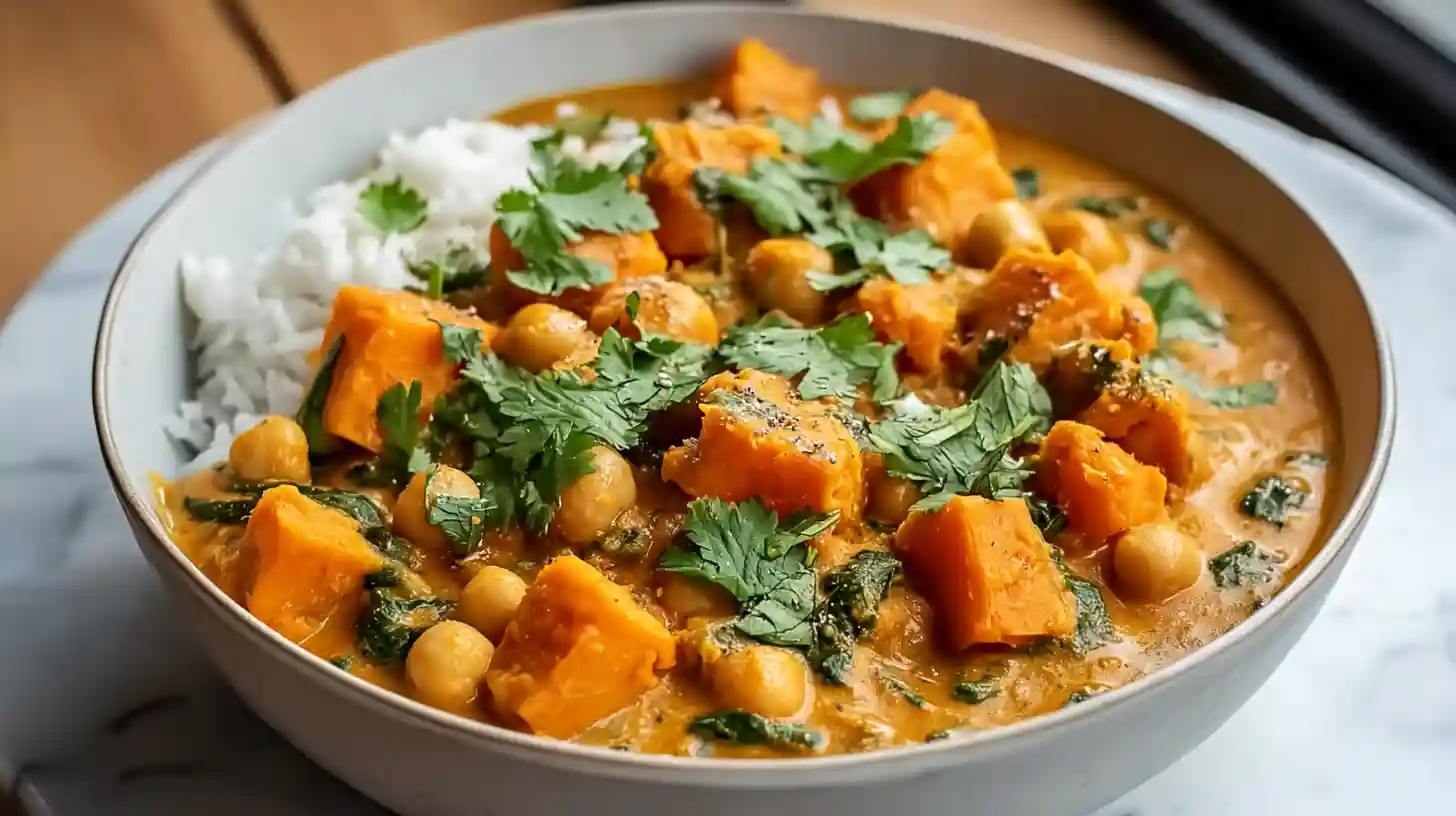
Sweet Potato and Chickpea Curry
Ingredients
Equipment
Method
- Cook diced onion in oil over medium heat for 8 to 10 minutes until soft and lightly golden. Do not rush on high heat.
- Add garlic and ginger. Cook 90 seconds. Add tomato paste, stir and cook 1 minute until darkened slightly.
- Add all spices. Stir constantly for 60 seconds to bloom in the residual oil.
- Pour in diced tomatoes, coconut milk, broth, and salt. Add sweet potato cubes. Bring to a simmer, then cover partially and cook over medium-low for 18 to 22 minutes until sweet potato is tender.
- Stir in chickpeas. Cook uncovered 5 more minutes. Taste and adjust salt and cayenne. Squeeze in half a lime.
- Serve over basmati rice or with naan. Top with fresh cilantro and lime wedges.
Notes
- Cook the onion slowly over medium heat – rushed onions produce a sharp base that never fully smooths out in the finished sauce.
- Bloom spices in oil for 60 seconds before adding liquid – this activates fat-soluble flavor compounds and creates real depth in the sauce.
- The sauce thickens as it cools – pull it from the heat when it looks slightly thinner than the target consistency.
- For a vindaloo-style version, add 1.5 tbsp apple cider vinegar with the tomatoes and increase cayenne to 1 tsp.
- Stores refrigerated up to 5 days and freezes up to 3 months – flavors improve significantly overnight.