
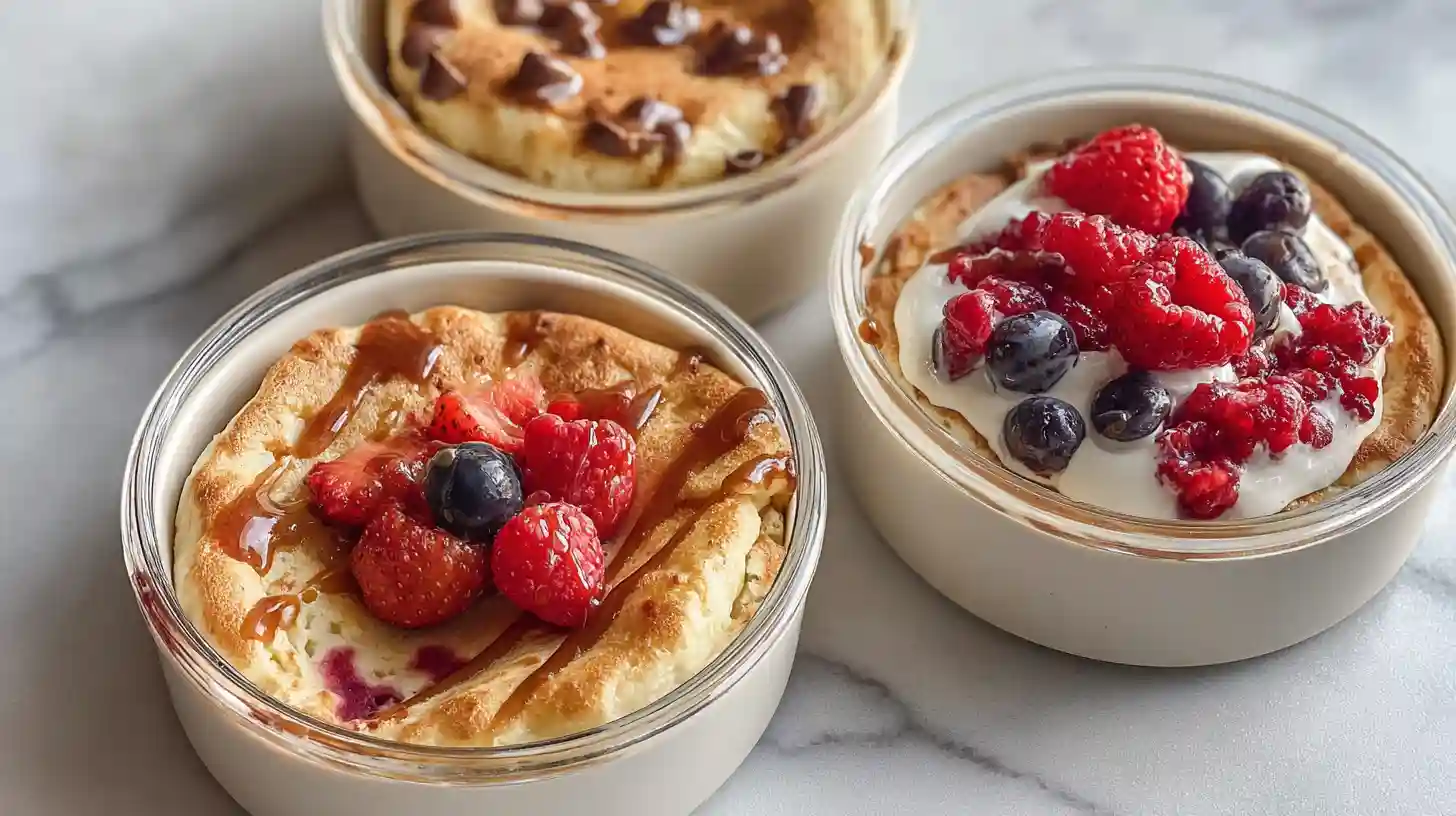
Most high-protein breakfasts either take too long on a weekday morning or require a banana as the binding base for everything. These Baked Protein Pancake Bowls are great for meal prep and no banana needed, which makes them genuinely useful for anyone who wants a warm, satisfying pancake-style breakfast without standing at a skillet or relying on overripe fruit. The batter comes together in minutes, bakes in individual ramekins or a muffin tin, and stores well in the refrigerator for the full week. Reheat in under 90 seconds and breakfast is handled before the coffee finishes brewing.
Greek yogurt and protein powder replace the banana as the moisture and binding foundation. The result is a denser, fluffier texture than a standard pancake with considerably more protein per serving and a taste that is close to a thick baked pancake rather than a protein bar or a muffin.
Baked Protein Pancake Bowls Ingredients
- 1 cup old-fashioned rolled oats, blended into oat flour or 1 cup oat flour
- 1 scoop vanilla protein powder, about 30g, whey or plant-based both work
- 1 tsp baking powder
- 1/2 tsp baking soda
- 1/2 tsp ground cinnamon
- 1/4 tsp fine salt
- 2 large eggs
- 3/4 cup plain Greek yogurt, full fat or 2 percent
- 1/3 cup milk of choice, dairy or unsweetened oat milk
- 2 tbsp maple syrup or honey
- 1 tsp vanilla extract
- 1/3 cup mix-ins of choice, blueberries, chocolate chips, diced apple, or chopped walnuts
How to Make Baked Protein Pancake Bowls Step by Step
Protein powder behaves differently in baked goods depending on the type. Whey protein produces a softer, more tender crumb and blends smoothly into the batter without graininess. Plant-based protein powder, particularly pea or rice protein, absorbs more liquid and can produce a slightly denser, chewier texture. If using plant-based protein, add an extra tablespoon of milk to keep the batter at the right consistency. Avoid collagen powder as the only protein source since it doesn’t contribute structure the way whey or plant protein does and the bowls won’t set correctly in the center. The Greek yogurt is doing the majority of the binding work alongside the eggs, so full fat or 2 percent yogurt produces noticeably better texture than fat-free, which makes the batter thinner and the finished bowls slightly rubbery rather than soft and fluffy.
- Preheat oven to 350°F. Grease four 6-ounce ramekins or an 8-cup muffin tin generously with butter or cooking spray. Set on a baking sheet for easy transfer in and out of the oven.
- If starting with whole rolled oats, add them to a blender and pulse 10 to 15 times until they reach a fine, flour-like consistency. A few visible oat flecks are fine. Transfer to a medium bowl and whisk in protein powder, baking powder, baking soda, cinnamon, and salt.
- In a separate bowl, whisk together eggs, Greek yogurt, milk, maple syrup, and vanilla until smooth and uniform. The batter should look thick and slightly glossy. If the Greek yogurt was cold from the refrigerator, the batter may look lumpy at first. Continue whisking until it smooths out, about 30 seconds more.
- Pour the wet ingredients into the dry and stir until just combined. A few small lumps are acceptable. Overmixing develops the oat flour and makes the texture dense and gummy rather than the light, soft baked pancake bowl result this recipe is designed for. Fold in mix-ins with two or three strokes.
- Divide batter evenly among the prepared ramekins, filling each about three-quarters full. Press a few extra mix-ins onto the surface of each bowl before baking for visual appeal and an extra burst of flavor on top. Bake at 350°F for 18 to 22 minutes until the tops are set, lightly golden, and a toothpick inserted in the center comes out with a few moist crumbs rather than wet batter.
- Cool in the ramekins for 5 minutes before eating warm or transferring to a wire rack to cool completely for meal prep storage. The texture firms slightly as the bowls cool and the oat flour absorbs any remaining moisture from the center.
Ingredient Swaps That Work Well
Greek yogurt can be replaced with dairy-free coconut yogurt in the same quantity for a non-dairy version of these healthy baked pancakes. The texture is slightly softer with coconut yogurt since the fat content differs, but the bowls bake through cleanly and hold their shape. Cottage cheese blended smooth is another high-protein substitute that produces a very similar texture to Greek yogurt and boosts the protein content per bowl further. For a lower sugar baked protein pancake bowl, swap the maple syrup for a small amount of monk fruit sweetener or simply omit the added sweetener entirely and rely on the vanilla protein powder and mix-ins for sweetness. Unsweetened vanilla protein powder with a handful of dark chocolate chips provides enough sweetness for most palates without any added liquid sweetener.
Flavor Variations for the Full Week
Part of what makes this pancake bowls meal prep approach practical is varying the mix-ins across a batch so each day of the week tastes different from the same base batter. Blueberry lemon, made by adding a teaspoon of lemon zest to the batter and using fresh or frozen blueberries, pairs particularly well with vanilla protein powder. A cinnamon apple version with finely diced fresh apple and a pinch of nutmeg added to the dry ingredients resembles a dessert inspired overnight oats flavor profile in baked form and works well with plain or cinnamon swirl protein powder. For a chocolate peanut butter pancake protein bowl variation, swap vanilla protein for chocolate protein powder and swirl a tablespoon of natural peanut butter into each ramekin before baking. The peanut butter creates a ripple through the baked bowl that partially melts into the batter during baking.
Meal Prep Storage and Reheating
Cooled bowls store in an airtight container in the refrigerator for up to 5 days. For a full pancake protein bowl meal prep week, bake a double batch of eight on Sunday and store them in individual containers ready to grab. Reheat directly in the ramekin or transferred to a microwave-safe bowl at full power for 60 to 90 seconds. Add a fresh drizzle of maple syrup, a spoonful of nut butter, or fresh berries on top after reheating to restore the just-baked feel that cold storage takes away. These baked protein pancake bowls also freeze well individually wrapped for up to 2 months. Thaw overnight in the refrigerator and reheat from cold in the microwave 90 seconds to 2 minutes, or in a 300°F oven for 10 minutes directly from frozen for a slightly crispier top surface.
FAQ
Can I make these without protein powder?
Yes. Replace the protein powder with an equal weight of additional oat flour, about 30g or 3 to 4 tablespoons. The protein content per bowl will be lower but the texture stays largely the same since the Greek yogurt and eggs handle the binding and structure. Without protein powder the batter may be slightly thinner, so reduce the milk by one tablespoon to compensate. The finished baked pancake bowl will taste more like a classic oat pancake and less like a protein-forward version, which works well if the goal is simply a convenient healthy baked pancake prep without the supplement component. Adding a tablespoon of hemp seeds or ground flaxseed to the dry ingredients partially offsets the protein reduction in a whole-food way.
Why are my bowls gummy in the center?
Underbaking and overmixing are the two most common causes of a gummy interior in protein pancake cups. Oat flour and protein powder both absorb liquid slowly during baking, and a toothpick test done too early will look clean even when the center is still wet inside. Test at the 20-minute mark and look for set edges, a firm surface that springs back when pressed gently, and a toothpick with moist crumbs rather than wet streaks. If the centers are consistently gummy across multiple batches, the Greek yogurt being used may be a thinner variety. Strain it through a cheesecloth for 10 minutes before using to remove excess liquid, or switch to a thicker Greek yogurt brand. Overmixing activates the starch in the oat flour prematurely and creates a pasty, dense crumb that never fully bakes out regardless of oven time.
Can I bake these in a muffin tin instead of ramekins?
Yes, and a standard muffin tin is actually more practical for meal prep pancake bowl batches since it produces eight portions at once rather than four. Fill each cup about three-quarters full and bake at 350°F for 15 to 18 minutes, checking at 15 minutes since the shallower depth of a muffin cup means the batter sets faster than in a ramekin. The result is slightly more muffin-shaped than bowl-shaped but the texture and flavor are identical. Mini muffin tins also work well for smaller, snack-sized baked protein pancakes that work as a protein pancake cup option for mid-morning eating between meals, baked for 10 to 12 minutes at the same temperature.
Which protein powder works best in this recipe?
Vanilla whey protein produces the best texture overall, giving a soft, slightly springy crumb that closely resembles a real pancake interior. Vanilla casein protein works similarly but absorbs more liquid, making the batter thicker and the finished bowl slightly denser and more filling, which suits the meal prep pancake bowl format well for mornings that need sustained energy. Plant-based blends made from pea and rice protein work reliably with the extra tablespoon of milk adjustment mentioned in the baking instructions. Avoid protein powders with very high fiber additions or those that list chicory root as a main ingredient since both create a gummy, overly thick batter that doesn’t bake through evenly in the time this recipe requires. Unflavored protein powder works but the bowls taste noticeably less sweet and need a heavier hand with the maple syrup or mix-ins to compensate.
How much protein is in each bowl?
Each baked protein pancake bowl made with one scoop of whey protein and full fat Greek yogurt contains approximately 18 to 22 grams of protein depending on the specific protein powder brand and Greek yogurt protein content. The eggs contribute an additional 6 grams across the full batch, or about 1.5 grams per bowl. Adding cottage cheese in place of Greek yogurt, or stirring a tablespoon of nut butter into the batter, pushes the per-bowl protein count higher. For anyone tracking macros, the most accurate count comes from inputting the specific brands used into a nutrition calculator since protein powder content varies considerably from one brand to the next, sometimes by 5 to 8 grams per scoop.
Baked Protein Pancake Bowls
Ingredients
Equipment
Method
- Preheat oven to 350°F. Grease four 6-oz ramekins generously and set on a baking sheet.
- Blend rolled oats into oat flour if starting from whole oats. Whisk oat flour, protein powder, baking powder, baking soda, cinnamon, and salt in a bowl.
- Whisk eggs, Greek yogurt, milk, maple syrup, and vanilla together in a separate bowl until smooth.
- Pour wet ingredients into dry. Stir until just combined. Do not overmix. Fold in mix-ins with 2 to 3 strokes.
- Divide batter evenly among ramekins, filling three-quarters full. Press extra mix-ins onto the surface. Bake 18 to 22 minutes until tops are set and golden and a toothpick comes out with moist crumbs.
- Cool 5 minutes in ramekins before serving warm or transferring to a rack to cool fully for meal prep storage.
Notes
- Use full fat or 2 percent Greek yogurt – fat-free makes the batter thinner and the finished bowls rubbery rather than fluffy.
- Do not overmix after combining wet and dry – a few small lumps are fine and produce a better texture than a fully smooth batter.
- For plant-based protein powder, add 1 extra tablespoon of milk to compensate for higher liquid absorption.
- Store cooled bowls in the refrigerator up to 5 days. Reheat 60 to 90 seconds in the microwave.
- Freeze individually wrapped for up to 2 months – microwave from frozen 90 seconds to 2 minutes.