
Some nights the appeal of cooking comes entirely from how little effort it actually requires. One Pot Creamy Garlic Pasta sits at that intersection of minimal work and genuinely good results. Pasta cooks directly in seasoned broth and cream in a single skillet, absorbing the liquid as it softens and releasing starch that thickens the sauce without any roux or separate cream reduction. Garlic goes in early and has time to mellow. Parmesan finishes everything off at the end. Twenty minutes from a cold pan to a full bowl, and only one piece of cookware to wash afterward.
The starch released by the pasta as it cooks is what makes this sauce work. Rinsing the pasta at any point removes that starch and breaks down the creamy texture the method depends on. Skip the colander entirely for this one.
One Pot Creamy Garlic Pasta Ingredients
- 8 oz spaghetti, linguine, or fettuccine
- 6 garlic cloves, thinly sliced or minced
- 2 tbsp unsalted butter
- 1 tbsp olive oil
- 2 cups chicken broth or vegetable broth
- 1 cup heavy cream
- 1/2 cup water, added as needed during cooking
- 1/2 tsp onion powder
- 1/4 tsp red pepper flakes, optional
- Salt and black pepper to taste
- 3/4 cup freshly grated parmesan cheese
- 2 tbsp fresh parsley, chopped, for serving
- Extra parmesan and cracked black pepper for topping
How to Make One Pot Creamy Garlic Pasta in One Skillet
Use a wide skillet or a straight-sided sauté pan rather than a deep pot. The pasta needs to lie as flat as possible in the liquid so it cooks evenly from both ends toward the center. A pan that is too narrow forces the pasta to stack and the ends that stick out above the liquid don’t soften at the same rate as the submerged section, which produces unevenly cooked pasta even when the timing is otherwise correct.
- Melt butter with olive oil in a large wide skillet over medium heat. Add sliced garlic and cook for 2 to 3 minutes, stirring frequently, until the garlic is fragrant and just beginning to turn pale gold at the edges. Do not let it brown fully at this stage. Browned garlic turns bitter and the flavor carries through the entire sauce in a way that is hard to correct afterward.
- Pour in chicken broth and heavy cream. Add onion powder, red pepper flakes if using, and a generous pinch of salt. Stir and bring to a gentle simmer over medium-high heat.
- Add dry pasta directly to the simmering liquid. Use tongs to press it down and submerge as much of the pasta as possible. As it softens over the first 2 minutes it will bend enough to fit fully in the pan.
- Cook uncovered over medium heat, stirring every 2 minutes and using tongs to separate any strands that stick together. As the pasta absorbs the liquid and the broth reduces, the sauce will thicken from the pasta starch. Add splashes of water, about 2 tablespoons at a time, if the pan looks dry before the pasta is fully cooked. Total cook time is typically 10 to 13 minutes depending on pasta thickness and the size of the pan.
- When the pasta is al dente and the sauce coats the strands with a glossy, creamy consistency, remove from heat. Immediately add grated parmesan and stir vigorously until the cheese melts fully into the sauce without clumping. Adding parmesan off the heat rather than over active heat prevents the cheese from seizing and clumping at the bottom of the pan.
- Taste and adjust salt, pepper, and garlic level. Plate directly from the skillet and finish with fresh parsley and extra parmesan.
Getting the Sauce Consistency Right Every Time
The sauce thickens as the pasta cooks from the starch it releases into the liquid. If the sauce is still very thin when the pasta reaches al dente, increase the heat briefly to medium-high and stir constantly for 1 to 2 minutes until it reduces to a coating consistency. If the sauce thickens too much before the pasta finishes cooking, add a small splash of warm water or broth and stir it in immediately. The target is a sauce that clings to the pasta without pooling heavily at the bottom of the pan, similar to a restaurant-style simple garlic pasta coating.
Freshly grated parmesan from a block melts much more smoothly into the sauce than pre-shredded bagged parmesan, which contains anti-caking starch coating that causes clumping. This is the single biggest textural difference between a smooth, silky result and a grainy one in this one pot creamy garlic butter pasta format.
Easy Variations for Different Nights
For cheap easy dinners for two with protein added, stir in 1 cup of shredded rotisserie chicken during the last 2 minutes of pasta cooking time. The chicken heats through in the sauce without any additional prep. Sliced Italian sausage cooked separately in the pan first and then set aside while the pasta cooks also works well and adds a spiced, savory layer to the all recipes creamy garlic pasta base. Stir the cooked sausage back in just before the parmesan goes in.
For a girl dinner recipes version that stays light and fast, add 2 cups of fresh baby spinach and 1/2 cup of halved cherry tomatoes to the pan in the final 2 minutes of cooking. Both wilt or warm quickly in the hot sauce and add color, texture, and freshness without any extra cook time. The tomatoes burst slightly and release juice that brightens the cream base in a way that cuts through the richness well.
Storing and Reheating Without Drying Out
This pasta is best eaten immediately after cooking since the sauce continues absorbing into the pasta as it cools and the dish thickens considerably within 20 minutes of sitting. For easy lunch ideas at home the next day, store leftovers in an airtight container for up to 3 days. Reheat in a small saucepan over low heat with 2 to 3 tablespoons of water or broth stirred in to loosen the sauce as it warms. Microwave reheating works in 60-second intervals at medium power with a splash of liquid added before heating and a stir between each interval. Do not reheat at full power since the cream sauce separates unevenly when heated too fast from a single direction.
FAQ
Can I use milk instead of heavy cream?
Whole milk can be substituted for heavy cream but the sauce will be noticeably thinner and less rich since the lower fat content doesn’t reduce to the same consistency. To compensate, add 1 teaspoon of cornstarch dissolved in 1 tablespoon of cold water to the sauce during the last 2 minutes of cooking. This thickens the milk-based sauce to a closer approximation of the heavy cream version without adding significant calories. Half-and-half sits between whole milk and cream in both fat content and sauce behavior and is the most practical substitute if heavy cream isn’t available for this cooking ideas for dinner easy recipes approach.
What pasta shapes work best in a one pot method?
Long pasta shapes like spaghetti, linguine, and fettuccine work best because they lie flat in the pan and cook evenly as the liquid absorbs. Short pasta shapes like penne or rigatoni work but require slightly more liquid since they absorb at a different rate and the starch they release doesn’t thicken the sauce as quickly as long pasta does. Avoid very thin pasta like angel hair since it overcooks in minutes and turns mushy before the sauce has reduced enough. Standard spaghetti is the most reliable and forgiving shape for easy pasta ideas using this one-pan liquid absorption method.
Can I make this dairy-free?
Full-fat canned coconut cream is the most effective dairy-free substitute for heavy cream in this recipe. Use the same 1-cup quantity and shake the can well before opening. The coconut flavor is present but mild once the garlic and parmesan are added, and most people don’t identify it as distinctly coconut in the finished dish. For the parmesan, use a store-bought dairy-free parmesan alternative or substitute with 2 tablespoons of nutritional yeast stirred in off the heat for a similar umami note. The sauce will be slightly less thick than the original something easy to cook for dinner version but still satisfying and cohesive.
Why is my sauce grainy or broken?
Grainy sauce almost always comes from adding parmesan while the pan is still over active heat, or from using pre-shredded bagged parmesan. Remove the pan from the burner completely before adding parmesan and stir quickly and continuously until it melts in. If the sauce looks broken or greasy, add a tablespoon of warm water and stir vigorously off the heat. The added water helps re-emulsify the sauce in many cases. Going forward, grating parmesan fresh from a block right before adding it to the pan is the most reliable way to guarantee a smooth result in any one pot creamy garlic butter pasta recipe.
How do I scale this recipe for more people?
Double the recipe by using 16 oz of pasta, 4 cups of broth, and 2 cups of cream in a very large skillet or a wide straight-sided pot. The timing stays roughly the same since the pasta thickness determines cook time more than the batch size. The main adjustment needed is using a wider vessel so the pasta can lay flat in the liquid. Cooking two separate batches in the same skillet back to back also works well and produces a more consistent result than trying to fit a very large quantity into a pan that is too narrow, which is the most common scaling problem with this easy lunch ideas at home format.
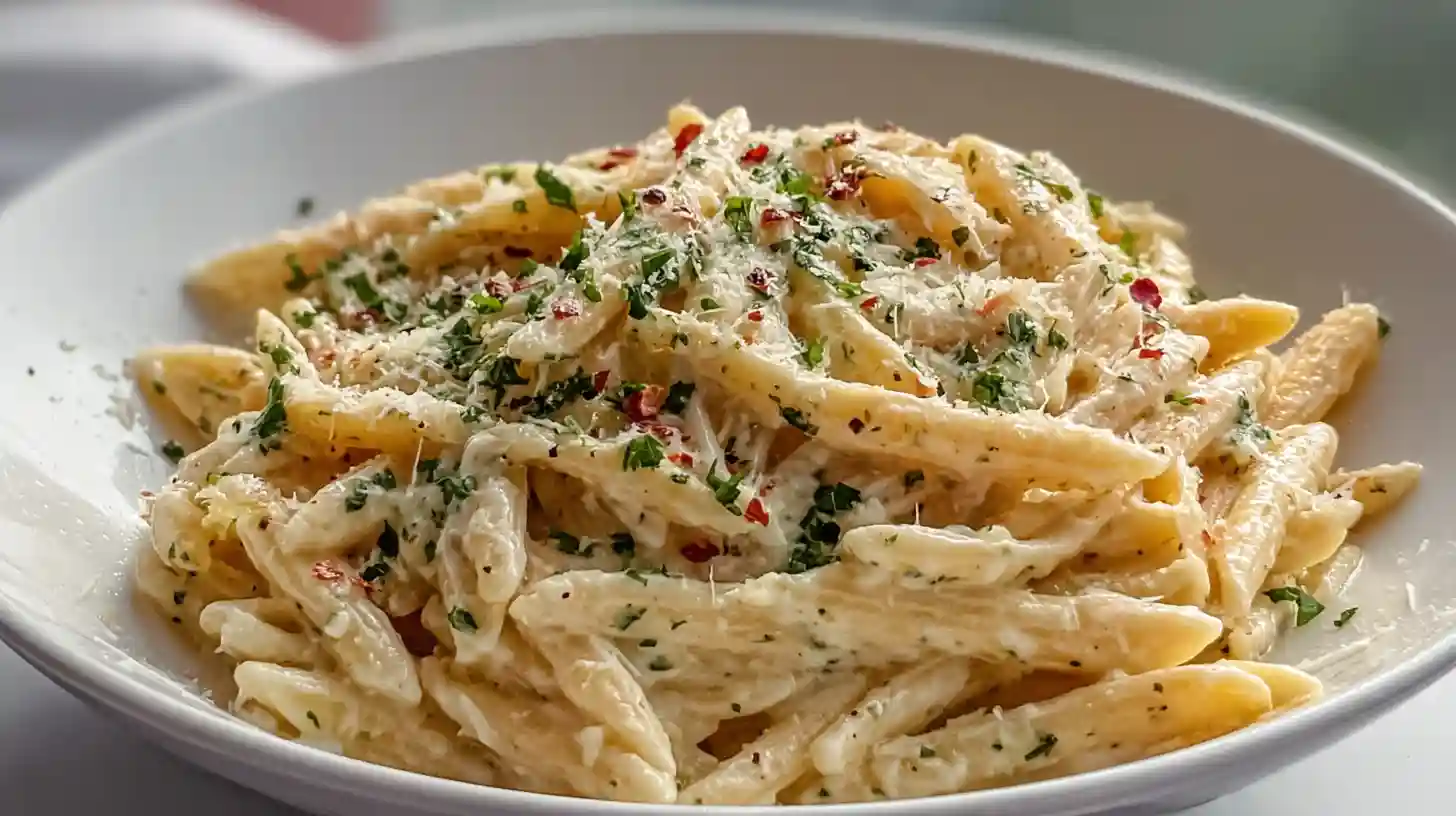
One Pot Creamy Garlic Pasta
Ingredients
Equipment
Method
- Melt butter with olive oil over medium heat. Add garlic and cook 2 to 3 minutes until fragrant and just pale gold. Do not brown fully.
- Add broth, cream, onion powder, red pepper flakes, and salt. Stir and bring to a gentle simmer over medium-high heat.
- Add dry pasta directly to the simmering liquid. Press down with tongs to submerge. Cook uncovered over medium heat, stirring every 2 minutes, for 10 to 13 minutes until al dente and sauce is glossy and coating. Add water in small splashes if the pan looks dry before pasta is done.
- Remove from heat. Add parmesan and stir vigorously until fully melted and smooth. Season with salt and pepper.
- Plate immediately and top with fresh parsley, extra parmesan, and cracked black pepper.
Notes
- Use a wide skillet so pasta lies as flat as possible in the liquid for even cooking.
- Never rinse the pasta – the starch it releases thickens the sauce naturally.
- Add parmesan only after removing the pan from heat to prevent clumping and graininess.
- Use freshly grated parmesan from a block – pre-shredded bagged parmesan contains anti-caking starch that causes lumpy sauce.
- Reheat leftovers with 2 to 3 tablespoons of water or broth over low heat, stirring constantly, to restore the sauce texture.