
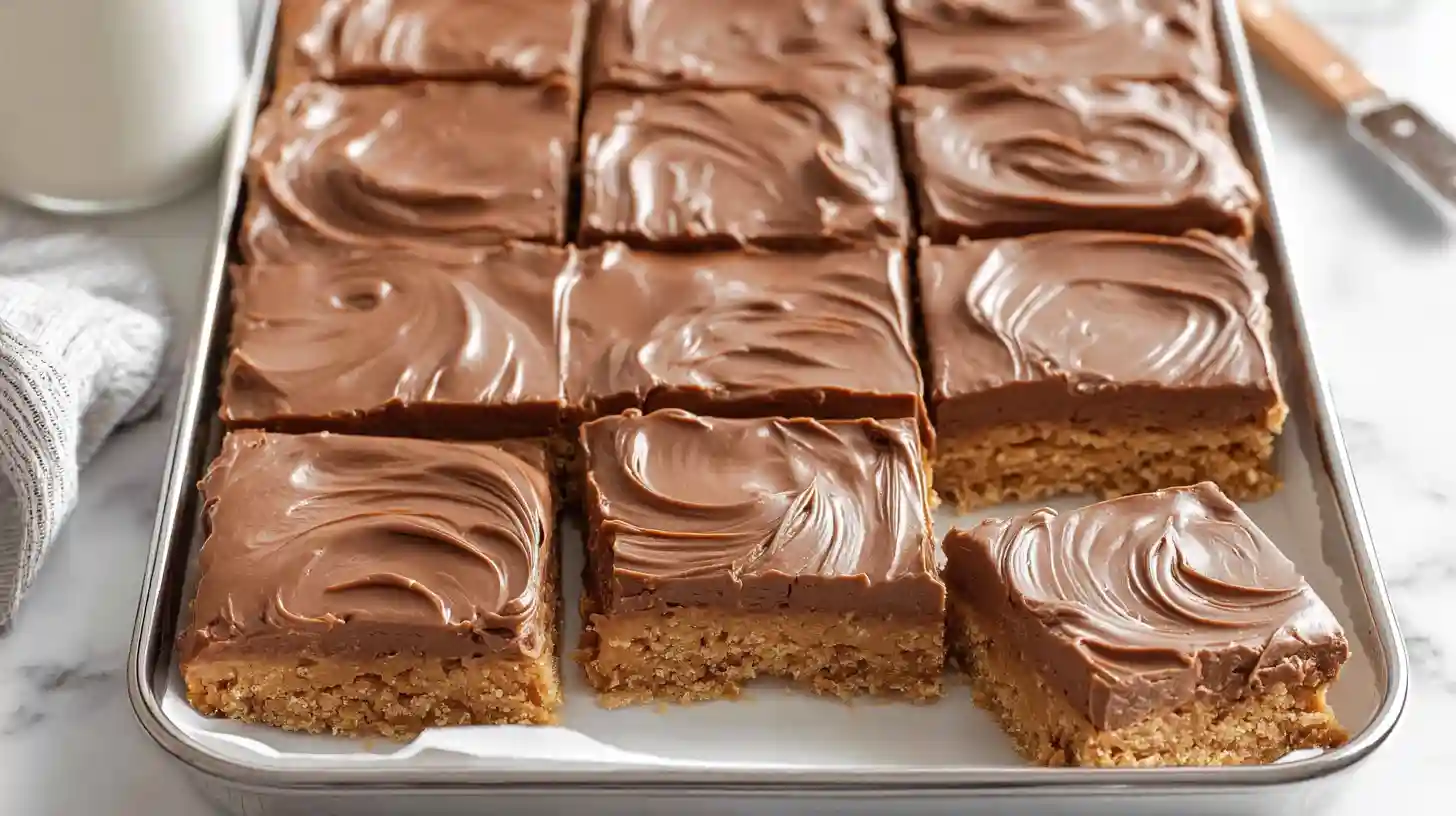
Anyone who grew up eating school cafeteria desserts probably remembers these. Lunch Lady Peanut Butter Bars were the kind of treat that made the whole lunch line worth standing in, soft peanut butter base somewhere between a cookie and a blondie, topped with a thick chocolate peanut butter frosting that set just enough to hold its shape when cut. The recipe has been recreated in home kitchens for decades for good reason. It uses pantry basics, bakes in a 9×13 pan, and comes together without any special equipment or technique.
These easy lunch lady peanut butter bars are the kind of thing you make once and then keep making because the batch disappears before you expect it to.
Ingredients for Lunch Lady Peanut Butter Bars
Peanut Butter Bar Base
- 1/2 cup unsalted butter, softened to room temperature
- 1/2 cup granulated sugar
- 1/2 cup packed light brown sugar
- 1/2 cup creamy peanut butter, standard commercial brand not natural
- 2 large eggs, room temperature
- 1 tsp vanilla extract
- 1 cup all-purpose flour
- 1 cup quick-cooking oats
- 1/2 tsp baking soda
- 1/4 tsp fine salt
Chocolate Peanut Butter Frosting
- 1/4 cup unsalted butter, softened
- 1/4 cup creamy peanut butter
- 2 tbsp unsweetened cocoa powder
- 2 cups powdered sugar, sifted
- 3 to 4 tbsp whole milk, added gradually
- 1/2 tsp vanilla extract
- Pinch of salt
How to Make Lunch Lady Peanut Butter Bars the Right Way
Use commercial creamy peanut butter like Jif or Skippy throughout the entire recipe, both in the base and the frosting. Natural peanut butter with oil separation produces a greasier, less cohesive bar base and a frosting that doesn’t emulsify properly with the butter. Room-temperature butter and eggs also matter here for even mixing.
- Preheat oven to 350°F. Grease a 9×13 baking pan or line with parchment paper.
- Beat softened butter, granulated sugar, and brown sugar together with a hand mixer or stand mixer on medium speed for 2 to 3 minutes until light and fluffy. The mixture should look pale and slightly increased in volume.
- Add peanut butter and beat until fully combined, about 1 minute. Add eggs one at a time, mixing after each addition, then add vanilla and mix briefly to incorporate.
- In a separate bowl, whisk together flour, quick oats, baking soda, and salt. Add the dry mixture to the wet ingredients and mix on low until just combined. Avoid overmixing once the flour is added.
- Spread the dough evenly into the prepared pan using a spatula or lightly dampened fingertips. The dough is thick and slightly sticky. Press it into an even flat layer reaching the corners of the pan.
- Bake for 18 to 22 minutes until the top is set and the edges are just beginning to pull away from the sides. The center may look slightly underdone, which is correct. It firms up as it cools and produces the chewy texture these bars are known for. Do not overbake.
- Cool the bars completely in the pan before adding frosting. Adding frosting to warm bars melts the fat in the peanut butter and produces a greasy, unstable topping that won’t hold its texture when cut.
- Beat frosting ingredients together, starting with butter, peanut butter, cocoa, and vanilla on medium speed, then adding powdered sugar gradually with milk one tablespoon at a time until the frosting is thick, smooth, and spreadable. It should hold a soft peak.
- Spread frosting evenly over the completely cooled bar layer. Allow frosting to set at room temperature for 20 minutes before slicing into rectangles.
Texture Troubleshooting – Too Dry, Too Soft, or Frosting Too Stiff
Dry or crumbly bars almost always come from overbaking. At 22 minutes the bars should still look very slightly underdone in the center when pulled from the oven. If a toothpick comes out completely clean with no resistance, they have gone too far. The oats continue absorbing moisture as the bars cool, so the final texture after cooling is noticeably denser and chewier than the soft top suggests straight from the oven. If the bars are already baked too long, spreading the frosting while the bars are still barely warm helps add surface moisture back through the butter and peanut butter content in the frosting layer.
Frosting too stiff to spread? Add milk one teaspoon at a time and beat briefly between each addition. Too thin and sliding off the cooled bar surface? Add powdered sugar a tablespoon at a time until the consistency holds when pressed with a spatula. The frosting should be thicker than standard buttercream but thin enough to spread without tearing the bar surface underneath.
Variations Worth Trying on the Classic Base
For lunch lady chocolate peanut butter bars with more chocolate presence in the base itself, add 2 tablespoons of cocoa powder to the dry ingredient mixture alongside the flour. The bar base bakes up slightly darker and the contrast with the chocolate frosting becomes more pronounced when sliced. Crushed Butterfinger candy bars pressed into the frosting before it sets adds a crunchy, toffee-like element that turns this into something closer to a butterfinger peanut butter snack cake in bar form, without changing a single ingredient in the base recipe.
For peanut butter lunch ladies cookie bars with a chunkier texture, fold 1/2 cup of semi-sweet mini chocolate chips into the dough before spreading into the pan. They distribute more evenly than standard-size chips through the thick dough and add pockets of chocolate throughout the bar base rather than just on the frosted top surface.
Storing and Cutting Clean Bars Every Time
Store cut bars in an airtight container at room temperature for up to 4 days. The texture improves on day two after the oats have fully settled and the bar base firms evenly throughout. Refrigerating tightens the frosting and makes the bars easier to cut into very clean rectangles, which is useful for serving. Remove from the fridge 15 minutes before eating since cold bars are denser and the peanut butter flavor in both layers is less pronounced straight from the refrigerator. For the best lunch lady peanut butter bars recipes results when slicing, use a sharp knife wiped clean between cuts and press straight down rather than dragging through the frosting layer.
FAQ
Can I use old-fashioned rolled oats instead of quick oats?
Yes, but the texture of the finished bar changes noticeably. Quick oats blend more thoroughly into the dough during mixing and produce a smoother, more uniform bar base similar to the original cafeteria version. Old-fashioned rolled oats stay more distinct during baking and create a chewier, more textured bite with visible oat pieces throughout. Neither is wrong, they just produce different results. If using old-fashioned oats and you want a texture closer to the original, pulse them briefly in a food processor two or three times to break them down slightly before adding to the dough mixture.
Why do my bars spread too thin in the pan?
Butter that is too soft or even slightly melted before creaming is the most likely cause. Over-softened butter doesn’t trap air properly during creaming, which reduces the structure of the dough and causes it to spread flatter during baking. Butter for this recipe should be soft enough to press a finger indent into easily but still hold its shape and look opaque, not shiny or greasy. If the kitchen is warm and butter is softening quickly, chill the assembled dough in the pan for 15 minutes before baking to firm it back up before it hits the oven heat.
Can I double this recipe for a larger batch?
A doubled batch bakes well in a half-sheet pan, roughly 13×18 inches. Spread the dough evenly across the full surface and check for doneness at 20 minutes since the larger pan exposes more surface area and the edges brown faster than a standard 9×13. The frosting recipe doubles cleanly with the same mixing method. For how to make lunch lady peanut butter bars for a crowd, a doubled batch cut into 40 small rectangles is a practical serving size for a large group without any individual bar feeling too small.
Can I freeze these bars?
Yes, and they freeze very well. Freeze the bar base without frosting for the cleanest results. Wrap the whole uncut slab tightly in plastic wrap and then foil, and freeze for up to 2 months. Thaw overnight in the fridge or 2 hours at room temperature, then make fresh frosting and apply just before serving. Alternatively, freeze cut frosted bars individually wrapped in plastic. The frosting softens slightly after thawing but the flavor and texture of both layers hold well enough that these are among the best lunch lady peanut butter bars for make-ahead prep and freezer storage.
What makes these taste like the school cafeteria version?
The combination of quick oats in the base and commercial creamy peanut butter in both the bar and frosting is what produces that specific nostalgic flavor. Commercial peanut butter has a sweeter, more uniform flavor than natural varieties and blends into baked goods in a way that reads as familiar rather than distinctly peanut-forward. The cocoa and peanut butter together in the frosting is the other key detail, not a ganache or a straight chocolate layer, but specifically that cocoa-peanut butter buttercream that the easy lunch lady peanut butter bars are remembered for. Sifting the powdered sugar before mixing produces the smoothest frosting with no lumps that interrupt the clean top layer.
Lunch Lady Peanut Butter Bars
Ingredients
Equipment
Method
- Preheat oven to 350°F. Grease or line a 9×13 baking pan with parchment.
- Beat softened butter, granulated sugar, and brown sugar on medium speed for 2 to 3 minutes until light and fluffy. Add peanut butter and beat to combine.
- Add eggs one at a time, mixing after each. Add vanilla and mix briefly.
- Whisk together flour, oats, baking soda, and salt in a separate bowl. Add to wet ingredients and mix on low until just combined.
- Press dough evenly into the prepared pan. Bake 18 to 22 minutes until set at the edges and barely underdone in the center. Cool completely.
- Beat frosting ingredients together, adding milk one tablespoon at a time until thick and spreadable. Spread evenly over cooled bars.
- Let frosting set 20 minutes at room temperature. Slice into rectangles and serve.
Notes
- Use commercial creamy peanut butter in both the base and frosting – natural peanut butter produces a greasy, unstable result.
- Do not overbake – bars should look slightly underdone in the center when pulled from the oven.
- Cool bars completely before frosting or the topping will melt and become greasy.
- Refrigerate before slicing for the cleanest cuts through the frosting layer.
- Bars taste best on day two after the oat base has fully settled.