
Kani Salad Recipe is one of those Japanese restaurant staples that is genuinely easy to make at home once you understand what goes into it. Imitation crab pulled into thin shreds, crisp julienned cucumber, and a creamy spicy mayo dressing are the core of it, and the whole thing comes together in about 15 minutes with no cooking required. The texture is the main event here, and getting that right is mostly about how you prep the ingredients.
This also works well as crab salad for sushi nights at home, served alongside rolls or spooned into small cups as a starter. The Japanese crab salad dressing is simple but calibrated, and the balance between the mayo richness, the sriracha heat, and the rice vinegar acidity is what keeps the salad from feeling one-dimensional. It is a light, refreshing dish that works as well in summer as it does any other time of year.
Kani Salad Recipe Ingredients
- 8 oz imitation crab sticks, shredded by hand into thin strips
- 1 large English cucumber, julienned or cut into thin matchsticks
- 1 small mango, julienned, optional but recommended
- 2 green onions, thinly sliced
- 1 tbsp toasted sesame seeds
- 1 tbsp masago or tobiko, optional for topping
- 1/3 cup Japanese mayonnaise, Kewpie preferred – dressing
- 1 tbsp sriracha, adjust to taste – dressing
- 1 tsp rice vinegar – dressing
- 1 tsp soy sauce – dressing
- 1/2 tsp sesame oil – dressing
- 1/2 tsp sugar – dressing
How You Prep the Crab Makes a Big Difference
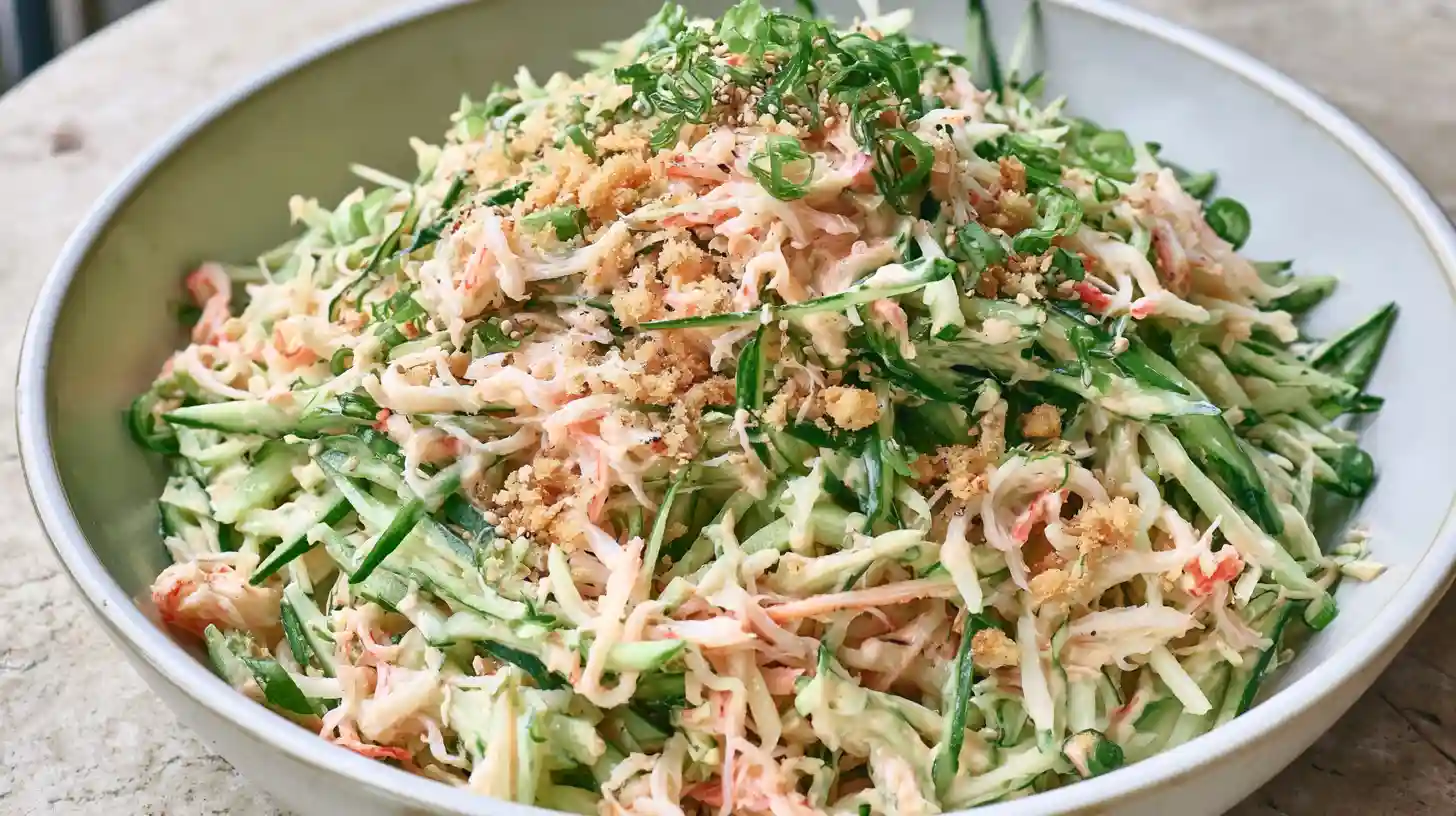
Imitation crab sticks are layered and peel apart easily into thin shreds when you pull them lengthwise with your fingers. That texture is what gives the salad its characteristic stringy, light quality. Chopping the crab into chunks instead produces a completely different result, more like a Western crab dip than a proper Japanese crab salad. Take a few minutes to pull each stick into fine shreds and the finished salad looks and eats the way it should.
The cucumber should be cut into matchsticks of similar length to the shredded crab. A mandoline makes this faster, but a sharp knife and some patience gets you there just as well. Cucumber kani salad depends on that crunch as a textural contrast to the soft crab and creamy dressing, so cutting the pieces too thick or leaving them in rounds changes the whole balance of the dish.
How to Make Kani Salad Recipe
- Shred the imitation crab sticks by hand into thin lengthwise strips.
- Julienne the cucumber into thin matchsticks and pat dry with paper towels.
- Julienne the mango if using and set aside.
- Whisk together all dressing ingredients in a small bowl until smooth.
- Combine the shredded crab, cucumber, and mango in a large bowl.
- Pour the dressing over the salad and toss gently to coat everything evenly.
- Transfer to a serving bowl and top with green onions, sesame seeds, and masago.
- Serve immediately or refrigerate for up to 30 minutes before serving.
Pro Tips for the Best Texture and Dressing Balance
Kewpie mayonnaise is the right choice for the dressing and it is worth seeking out. It is made with egg yolks only rather than whole eggs and has a richer, slightly tangier flavor than standard American mayo. Regular mayo works as a substitute, but the dressing will taste noticeably different. If you can find Kewpie at an Asian grocery store or online, the improvement to the overall salad is significant for such a small ingredient swap.
Pat the julienned cucumber dry before mixing. Cucumber releases water quickly once it is cut, and excess moisture dilutes the dressing and makes the bottom of the bowl watery within a few minutes. A gentle press with paper towels after cutting removes enough surface moisture to keep the dressing coating the ingredients rather than pooling underneath them.
Ingredient Substitutions Worth Knowing
Real crab meat can replace the imitation crab for a more premium version of this Asian crab salad. Cooked and chilled snow crab legs or Dungeness crab pulled into similar sized pieces works beautifully with the same dressing. The flavor is cleaner and more delicate, though the visual shredded texture is slightly different from the imitation version.
Avocado sliced into thin strips can replace the mango for a creamier, more neutral addition that still adds body to the salad. Both avocado and mango bring something different, and choosing between them depends on whether you want sweetness or richness alongside the spicy mayo. Either one is a valid direction for a spring Japanese salad recipe that leans fresh and light.
Variations and Serving Ideas
A Korean crab salad variation uses the same base but replaces the sriracha mayo with a gochujang-based dressing for a deeper, fermented heat that is distinctly different from the Japanese version. Add a small amount of gochujang, a little sesame oil, and rice vinegar to the mayo in place of the sriracha. The flavor shift is noticeable but the prep stays exactly the same.
Serve the salad inside cucumber cups for a plated starter, spoon it over steamed sushi rice for a simple rice bowl, or use it as a filling inside nori hand rolls. All three options turn this kani salad recipe into a more composed dish without requiring any additional cooking. The salad holds its own as a standalone, but it adapts well to how to make spicy kani salad feel like a full meal.
Troubleshooting Common Problems
If the dressing tastes too heavy or rich, a little extra rice vinegar cuts through the mayo and brings the balance back. Add it a few drops at a time rather than pouring. If the heat level is too high after tasting, stir in a small spoonful of plain Kewpie mayo to dilute the sriracha without adding more acid or sweetness.
A watery salad usually means the cucumber was not dried before mixing, or the salad sat too long before serving. This dish is best eaten within 30 to 45 minutes of dressing. If you need to prep further ahead, keep the dressing and the cucumber separate and combine everything right before serving to preserve the texture.
Storing and Serving Kani Salad Recipe
Kani Salad Recipe is best eaten fresh, ideally within 30 minutes of being dressed. The cucumber releases moisture over time and the crab softens slightly in the dressing, which affects the texture. If you need to store it, keep it covered in the refrigerator for up to one day, understanding that the texture will be softer by the second serving.
For a composed presentation, mound the salad in the center of a shallow bowl, fan a few cucumber slices around the edge, and finish with a thin drizzle of sriracha mayo over the top before scattering the sesame seeds and masago. That presentation works well for a dinner starter without any extra effort and gives the dish a restaurant-quality look from very simple plating.
FAQ
What is kani in kani salad?
Kani is the Japanese word for crab. In this salad it refers to imitation crab sticks made from surimi, a processed white fish paste shaped and flavored to resemble crab.
Can I use real crab instead of imitation?
Yes, cooked real crab meat works well and gives the salad a more delicate, clean flavor with the same dressing.
How spicy is this Kani Salad Recipe?
With 1 tablespoon of sriracha it has a mild to medium heat. Reduce or increase the sriracha to adjust it to your preference.
Can I make this salad ahead of time?
Prep the ingredients separately and combine with dressing no more than 30 minutes before serving for the best texture.
What can I use instead of Kewpie mayonnaise?
Regular mayonnaise works as a substitute, but Kewpie has a richer, slightly tangier flavor that makes the dressing taste more authentic.
Kani Salad Recipe
Ingredients
Equipment
Method
- Shred the crab sticks by hand into thin lengthwise strips.
- Julienne the cucumber and pat dry with paper towels.
- Whisk all dressing ingredients together until smooth.
- Toss crab, cucumber, and mango with the dressing and serve topped with sesame seeds and masago.
Notes
- Shred crab by hand lengthwise for the best texture.
- Pat cucumber dry before mixing to prevent a watery salad.
- Kewpie mayonnaise gives a noticeably better dressing than regular mayo.
- Best eaten within 30 minutes of dressing for peak texture.