

Pasta night doesn’t need more than one pan and about 30 minutes when Creamy Beef and Shells is the plan. Ground beef and small shell pasta cook together in a seasoned tomato base that gets finished with cream and cheese into a sauce thick enough to coat every curve of every shell. It’s the kind of ground beef pasta dinner that tastes like it took longer than it did, and it reheats well enough the next day that making extra is almost always worth it.
The pasta cooks directly in the skillet with the beef and sauce rather than in a separate pot, which keeps cleanup minimal and lets the starch from the shells thicken the sauce as everything finishes together.
Ingredients for Creamy Beef and Shells
Standard pantry and fridge ingredients. Nothing here requires a specialty store run.
- 1 lb ground beef, 80/20
- 1 small yellow onion, finely diced
- 4 cloves garlic, minced
- 1 tbsp olive oil
- 1 tbsp tomato paste
- 1 can (14.5 oz) diced tomatoes, undrained
- 2 cups beef broth
- 1 cup water
- 8 oz medium shell pasta, uncooked
- 1 tsp Italian seasoning
- 1/2 tsp smoked paprika
- 1/2 tsp onion powder
- Salt and black pepper to taste
- 3/4 cup heavy cream
- 1.5 cups shredded sharp cheddar or American cheese
- Fresh parsley for garnish
How to Make Creamy Beef and Shells in One Skillet
Use a large, deep skillet or a wide sauté pan with at least 3-inch sides. The pasta and liquid need room to cook without boiling over, and a shallow pan makes stirring difficult once the shells expand.
- Heat olive oil in a large deep skillet over medium-high heat. Add onion and cook 3 minutes until softened.
- Add ground beef and break apart with a spoon. Cook until fully browned, about 5 minutes. Drain excess fat, leaving about 1 tablespoon in the pan.
- Add garlic and cook 30 seconds. Stir in tomato paste and cook 1 minute, letting it darken slightly against the pan surface before stirring through.
- Add diced tomatoes with their liquid, beef broth, water, Italian seasoning, smoked paprika, onion powder, salt, and pepper. Stir to combine and bring to a boil.
- Add uncooked shell pasta. Stir well to submerge as much of the pasta as possible in the liquid. Reduce heat to medium, cover, and cook for 12 to 14 minutes, stirring every 3 to 4 minutes to prevent sticking, until pasta is just tender and most of the liquid is absorbed.
- Reduce heat to low. Pour in heavy cream and stir through. Let it warm for 1 minute without boiling.
- Add shredded cheese in two additions, stirring between each addition until fully melted and the sauce is smooth and glossy. If the sauce looks too thick, add a splash of broth or water to loosen it.
- Taste and adjust seasoning. Serve immediately, garnished with fresh parsley.
Getting the Sauce Consistency Right
The sauce thickens fast once the cheese goes in. Adding the cream first and letting it warm before the cheese follows prevents the cheese from seizing in too-hot liquid, which causes a grainy rather than smooth sauce. Keep the heat on low during this final stage and stir continuously. If the sauce is too loose after the cheese melts, let it sit uncovered on low for 2 minutes while stirring occasionally. The pasta starch already released into the liquid does most of the thickening without any additional flour or cornstarch needed.
Cheddar produces a sharper, more assertive flavor in beef dishes while American cheese melts into a silkier, creamier sauce with a milder profile. A mix of both, equal parts, gives you the flavor depth of cheddar and the texture smoothness of American. For a beef casserole recipes style richness, stir in a tablespoon of cream cheese alongside the shredded cheese for an extra layer of tang and body in the finished sauce.
Variations That Keep This Beef Pasta in Regular Rotation
A can of drained Rotel tomatoes with green chiles in place of plain diced tomatoes adds mild heat and a Tex-Mex lean to the flavor that works well with this sauce base. For pasta dinner recipes that need more vegetables, stir in a large handful of baby spinach right after the cream goes in. It wilts completely within 90 seconds and adds color and nutrients without changing the texture or flavor of the finished dish.
Italian sausage, either removed from its casing or used as loose ground sausage, swaps in cleanly for the ground beef with no changes to method or timing. The fennel and herb notes in the sausage push the dish closer to a stuffed shells recipe flavor profile, which pairs particularly well with the shell pasta shape already in the bowl. For a beef dinner with more smoke, replace smoked paprika with a teaspoon of chipotle powder and add a small can of fire-roasted tomatoes.
Storage and Reheating Without Losing the Sauce
Store leftovers in an airtight container in the fridge for up to 4 days. The pasta absorbs the sauce overnight so the next-day version is thicker and denser than the freshly made dish. Add 3 to 4 tablespoons of beef broth or water before reheating and stir while warming over medium-low heat until the sauce loosens and becomes glossy again. The microwave works at 60-second intervals with a splash of liquid added and the container loosely covered. Freezing is possible but the cream sauce can separate slightly on thawing. Reheat from frozen slowly over low heat with extra liquid and stir well until it comes back together.
FAQ
Can I use a different pasta shape for this recipe?
Yes. Elbow macaroni, rotini, cavatappi, or ditalini all work in place of shells and cook in roughly the same time range. The shell shape is preferred because the curved cavity traps the creamy beef sauce and cheese inside each piece, making every bite more flavorful than a flat or smooth pasta would be. Avoid very large pasta shapes like rigatoni or penne since they take longer to cook than the liquid in the pan can sustain, often leaving you with either overcooked beef or undercooked pasta by the time everything finishes.
My pasta is absorbing all the liquid before it’s fully cooked. What do I do?
Add 1/4 cup of hot water or broth at a time, stir through, and continue cooking covered. This happens most often when the heat is slightly too high and the liquid evaporates faster than the pasta can absorb it. Medium heat is the correct level for this stage, not medium-high. Stirring every 3 to 4 minutes also redistributes liquid and keeps the shells on the bottom from sticking and absorbing more than their share while the top shells stay partially uncooked. Once pasta is just tender, the exact liquid level matters less since the cream goes in immediately after and adjusts the consistency.
Can I make this ahead for meal prep?
Yes, and it’s one of the more reliable beef recipes easy enough to prep in bulk. Cook fully, cool, and portion into containers. Reheat individual portions with a splash of broth before each use. For a meal prep approach across 4 days, this recipe holds well enough that it is one of the more practical beef dishes in a weekly rotation. The sauce thickens as it sits so the reheated version has a denser, more concentrated flavor than the day it was made, which some people actually prefer.
Can I make this without heavy cream?
Half and half works as a lighter substitute and produces a thinner sauce that still coats the pasta well. Whole milk produces the thinnest result and benefits from a teaspoon of cornstarch mixed in before adding to prevent it from looking watery in the finished dish. For a dairy-free version, full-fat coconut cream melts into the sauce smoothly and adds richness without a strong coconut flavor since the tomato, beef, and cheese dominate the overall profile. Avoid low-fat milk since it doesn’t emulsify as cleanly and can curdle if the heat isn’t kept consistently low.
How do I prevent the cheese from making the sauce grainy?
Two things: lower the heat before adding cheese and add it in stages rather than all at once. Cheese added to a boiling or very hot liquid separates into greasy, grainy solids almost immediately. The sauce needs to be hot enough to melt the cheese but not actively simmering. Adding in two additions with stirring between each allows the first batch to fully incorporate before the next goes in, which keeps the sauce smooth and cohesive throughout. Pre-shredded cheese contains anti-caking agents that resist melting, so shredding from a block of cheddar gives the smoothest result for beef recipes for dinner where sauce texture matters.
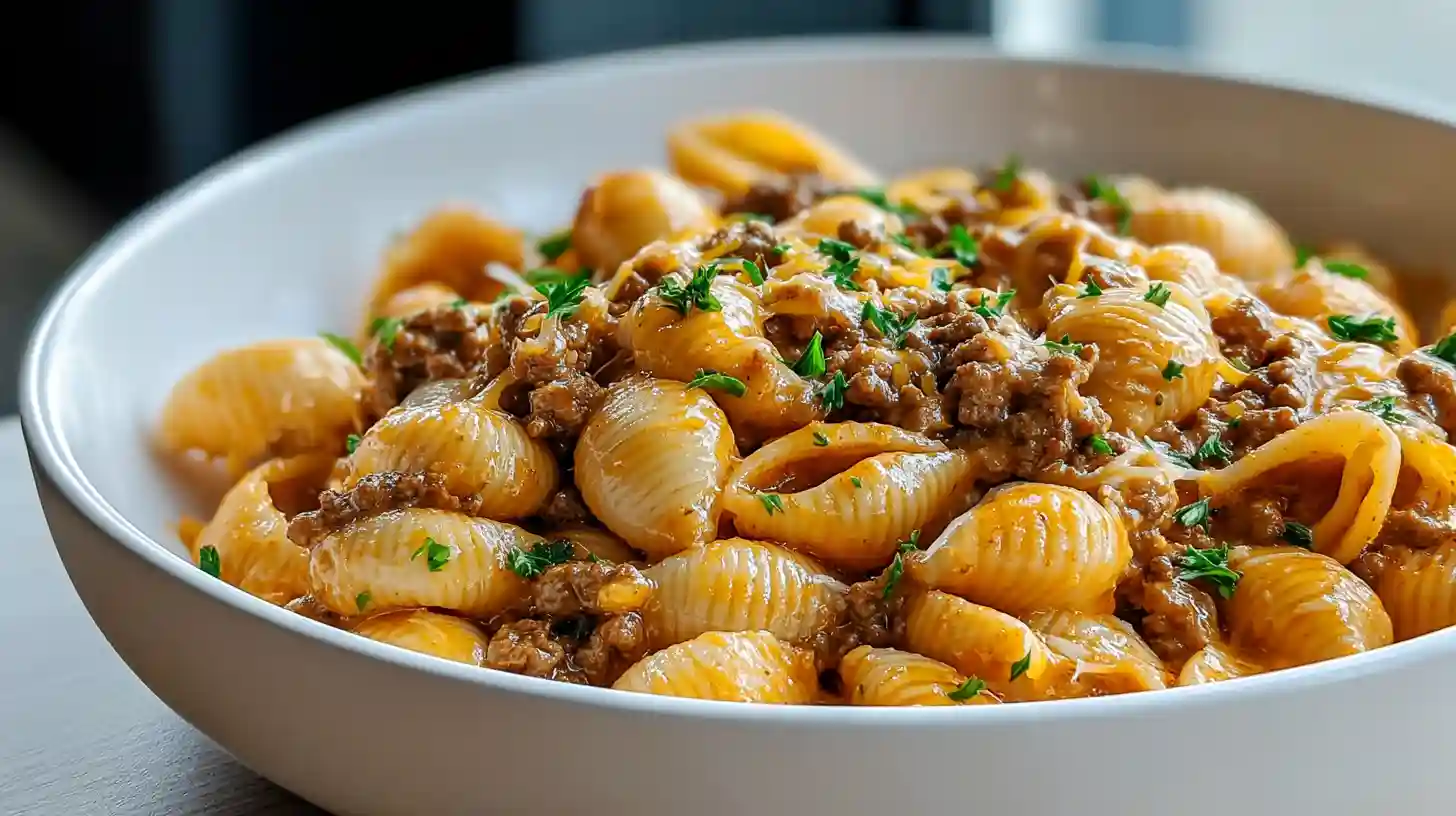
Creamy Beef and Shells
Ingredients
Equipment
Method
- Cook onion in olive oil 3 minutes. Brown ground beef, drain most fat. Add garlic and tomato paste, cook 1 minute.
- Add diced tomatoes, broth, water, and seasonings. Bring to a boil.
- Add uncooked shell pasta. Cover and cook on medium 12 to 14 minutes, stirring every few minutes, until pasta is just tender.
- Reduce heat to low. Stir in cream and warm 1 minute without boiling.
- Add cheese in two additions, stirring between each until smooth and glossy. Adjust seasoning and serve garnished with parsley.
Notes
- Keep heat on low when adding cream and cheese to prevent a grainy sauce.
- Add cheese in two stages with stirring between – this keeps the sauce smooth.
- If sauce thickens too much, add a splash of broth to loosen before serving.
- Shred cheese from a block for the best melt and texture.
- Reheat leftovers with 3 to 4 tbsp of broth stirred in to restore the sauce consistency.