
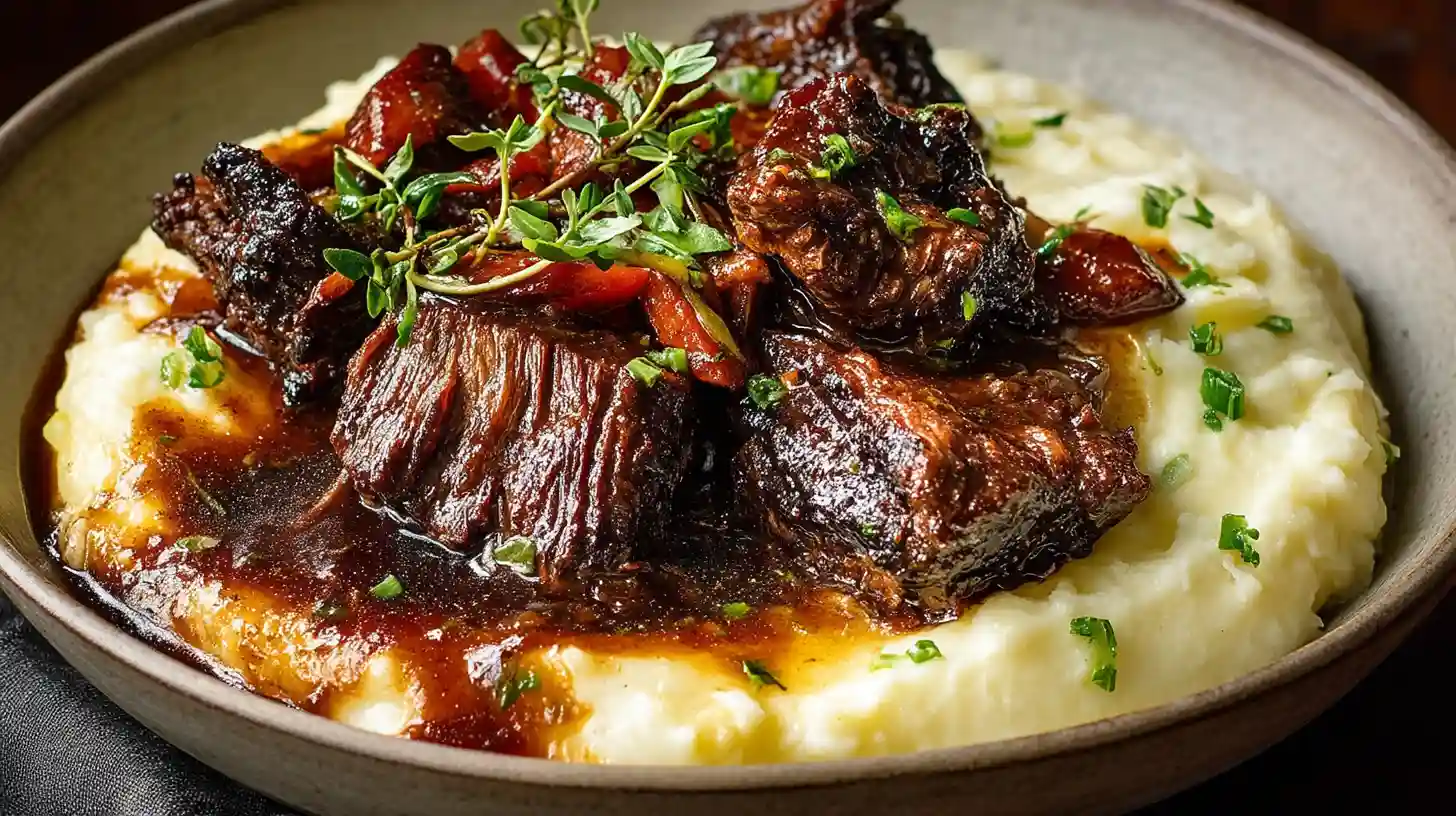
Some recipes reward patience more than skill, and red wine braised beef is exactly that kind of dish. A tough, affordable cut of beef transforms over a few hours in the oven into something deeply tender and rich with flavor. The braising liquid, built on red wine, aromatics, and beef broth, reduces into a sauce that is almost silky by the time the meat is ready. It is the kind of dinner that fills the kitchen with a smell that makes everyone ask what is cooking.
The prep is genuinely simple. Sear the beef, build the liquid, cover it, and let the oven take over. Most of the cook time is completely hands-off, which makes this a practical choice for a relaxed Sunday or any evening when you have a few hours and want dinner to feel a little more considered than usual.
What You Need for Red Wine Braised Beef
Use a braising cut here – chuck roast is ideal, but brisket and short ribs both work beautifully. Avoid lean cuts like sirloin, which dry out under long, moist heat.
- 2.5 lbs beef chuck roast, cut into large chunks or left whole
- 2 tablespoons olive oil
- 1 medium onion, roughly chopped
- 3 garlic cloves, smashed
- 2 medium carrots, cut into chunks
- 2 celery stalks, sliced
- 2 tablespoons tomato paste
- 1.5 cups dry red wine – such as Cabernet Sauvignon or Merlot
- 1 cup beef broth
- 2 sprigs fresh thyme
- 1 sprig fresh rosemary
- 1 bay leaf
- Salt and black pepper to taste
- 1 tablespoon all-purpose flour – optional, for thickening
Step-by-Step: How to Braise the Beef
- Preheat the oven to 325°F. Pat the beef dry on all sides with paper towels and season generously with salt and pepper.
- Heat olive oil in a large Dutch oven over medium-high heat. Sear the beef for 3 to 4 minutes per side until a deep brown crust forms. Work in batches if needed – do not crowd the pot. Remove and set aside.
- Reduce heat to medium. Add the onion, carrots, and celery to the same pot and cook for 4 to 5 minutes until softened. Add the garlic and cook for one more minute.
- Stir in the tomato paste and let it cook for 2 minutes, stirring frequently. It should deepen in color slightly and smell rich and slightly caramelized.
- Pour in the red wine and scrape up any browned bits from the bottom of the pot. Let the wine simmer for 3 to 4 minutes to cook off some of the sharpness.
- Add the beef broth, thyme, rosemary, and bay leaf. Nestle the seared beef back into the pot. The liquid should come about halfway up the sides of the meat.
- Cover tightly with the lid and transfer to the oven. Braise for 2.5 to 3 hours until the beef is completely fork-tender and pulling apart at the edges.
- Remove the beef carefully. Discard the herb sprigs and bay leaf. If you want a thicker sauce, whisk the tablespoon of flour into a small amount of the braising liquid, stir it back into the pot, and simmer on the stovetop over medium heat for 5 minutes.
Choosing the Right Wine for Braising
The wine does not need to be expensive, but it should be something you would actually drink. Avoid bottles labeled “cooking wine” as they contain added salt and can throw off the balance of the whole braising liquid. A dry red wine like Cabernet Sauvignon, Merlot, or Côtes du Rhône works well in this red wine beef recipe because they have enough body to stand up to the long cook time without becoming bitter. Lighter reds like Pinot Noir produce a more delicate, slightly less robust sauce, which some people prefer for a more refined wine braised beef dish.
Pro Tips for Deeper Flavor
Never skip the sear. That browned exterior on the beef is not just about appearance – it creates a layer of flavor through the Maillard reaction that the braising liquid alone cannot replicate. Also, resist opening the oven lid repeatedly during the braise. Each time you open it, heat escapes and the cooking time extends. Let it go undisturbed for at least the first two hours before checking. The beef is ready when a fork slides in with zero resistance and the meat begins to fall apart at the touch.
For the best red wine dinner results, make this a day ahead. The braised meat dinner tastes significantly better after an overnight rest in the fridge, when the beef has time to soak back into the cooled sauce. Reheat gently on the stovetop and the flavor will be noticeably deeper.
Serving and Storage
Creamy mashed potatoes are the most natural base for this dish – they absorb the sauce beautifully. Soft polenta, egg noodles, or crusty bread work just as well. For a lighter option, serve over steamed white rice or alongside roasted root vegetables. The braising liquid doubles as the sauce, so spoon it generously over everything when plating.
Store leftovers in an airtight container with the sauce for up to 4 days in the fridge. The fat will solidify on top once cold – skim it off before reheating if you prefer a leaner sauce. This red wine braised beef dish also freezes well for up to 3 months. Thaw overnight in the fridge and reheat covered on the stovetop over low heat, adding a splash of broth if the sauce has thickened too much.
FAQ
Can I make red wine braised beef in a slow cooker?
Yes. Sear the beef and build the braising liquid on the stovetop first, then transfer everything to a slow cooker. Cook on LOW for 8 to 9 hours or HIGH for 5 to 6 hours. The oven method gives a slightly richer result, but the slow cooker is a practical option for a hands-off braised meat dinner during the day.
What cut of beef is best for braising?
Chuck roast is the top choice because its fat content and connective tissue break down during the long braise, creating tenderness and body in the sauce. Brisket and bone-in short ribs are excellent alternatives. Avoid lean cuts – they tighten up under prolonged moist heat instead of becoming tender.
Do I have to use red wine – can I substitute it?
You can replace the wine with additional beef broth and a tablespoon of tomato paste plus a splash of balsamic vinegar for some acidity and depth. The flavor will be different but still very good. The wine adds a complexity that is hard to fully replicate, but the substitute version is a solid braised beef red wine alternative for those who prefer to avoid alcohol.
Why is my braised beef tough after the full cooking time?
It needs more time. Tough braised beef means the collagen has not fully broken down yet. Add 30 more minutes and check again. This happens more often with very thick pieces or when the oven temperature is slightly lower than indicated. Keep the lid on and let it continue cooking low and slow.
Can I add potatoes directly to the pot during braising?
You can, but add them during the last 45 minutes to 1 hour of braising so they do not over-cook and turn mushy. Waxy potato varieties like Yukon Gold hold their shape better than russets under long cooking. Cut them into large chunks so they do not disintegrate into the sauce.
Red Wine Braised Beef
Ingredients
Equipment
Method
- Preheat oven to 325°F. Pat beef dry and season generously with salt and pepper.
- Sear beef in olive oil over medium-high heat for 3 to 4 minutes per side until deeply browned. Remove and set aside.
- Cook onion, carrots, and celery in the same pot for 4 to 5 minutes. Add garlic and cook 1 minute more.
- Stir in tomato paste and cook for 2 minutes, then pour in red wine and simmer for 3 to 4 minutes.
- Add beef broth, herbs, and bay leaf. Nestle beef back into the pot with liquid halfway up the sides.
- Cover and braise in the oven for 2.5 to 3 hours until the beef is completely fork-tender.
- Remove herbs and bay leaf. Thicken sauce on the stovetop if desired, then serve with mashed potatoes or crusty bread.
Notes
- Never skip the sear – it builds the base flavor of the entire dish.
- This tastes even better made a day ahead and reheated.
- Use a dry red wine you would drink, not cooking wine.
- Refrigerate leftovers with the sauce for up to 4 days or freeze for up to 3 months.